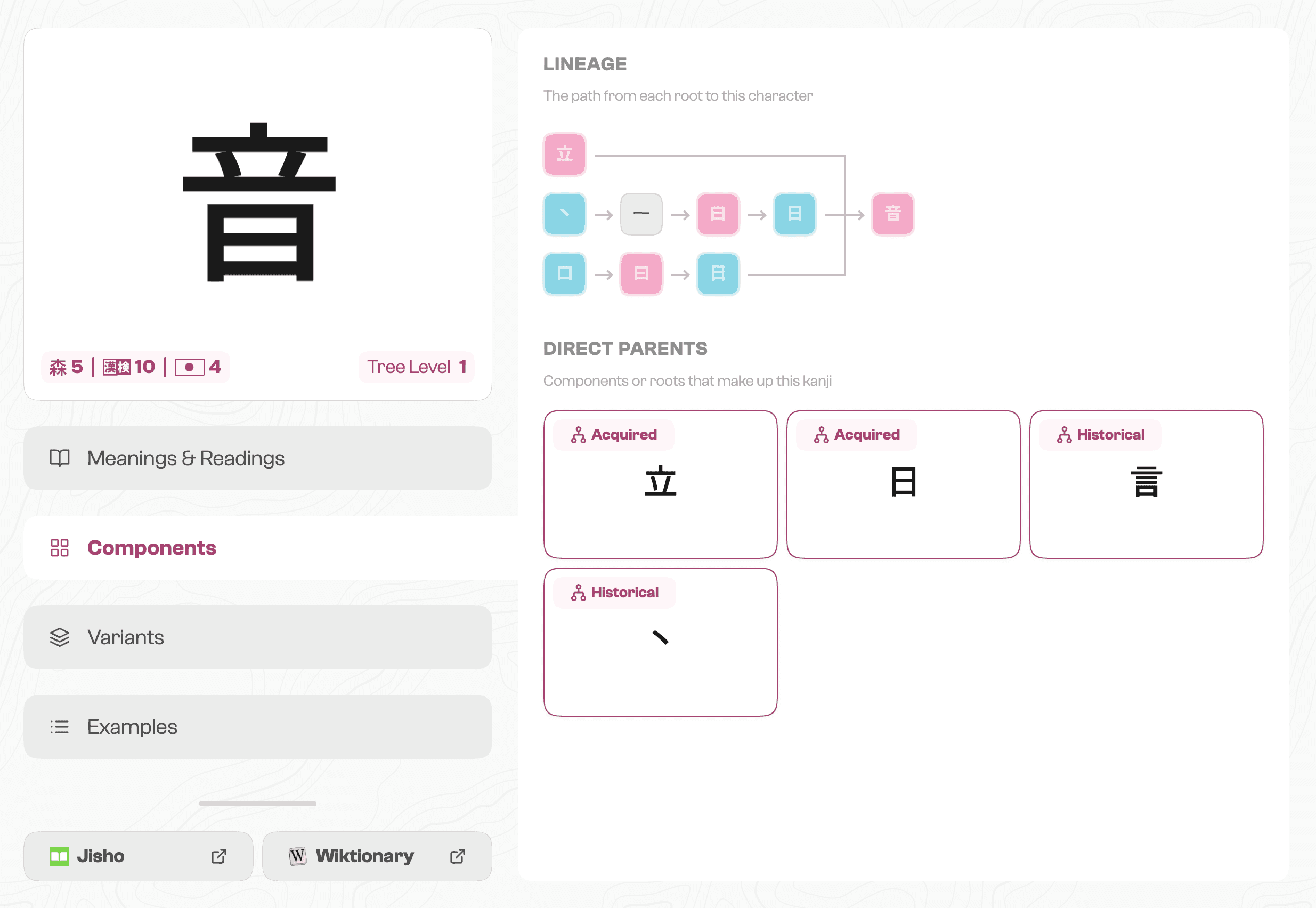
Kanji Database
Most kanji references show everything at once, which works for lookup but not learning.
I designed a database that prioritizes what learners are looking for and makes deeper exploration feel natural.
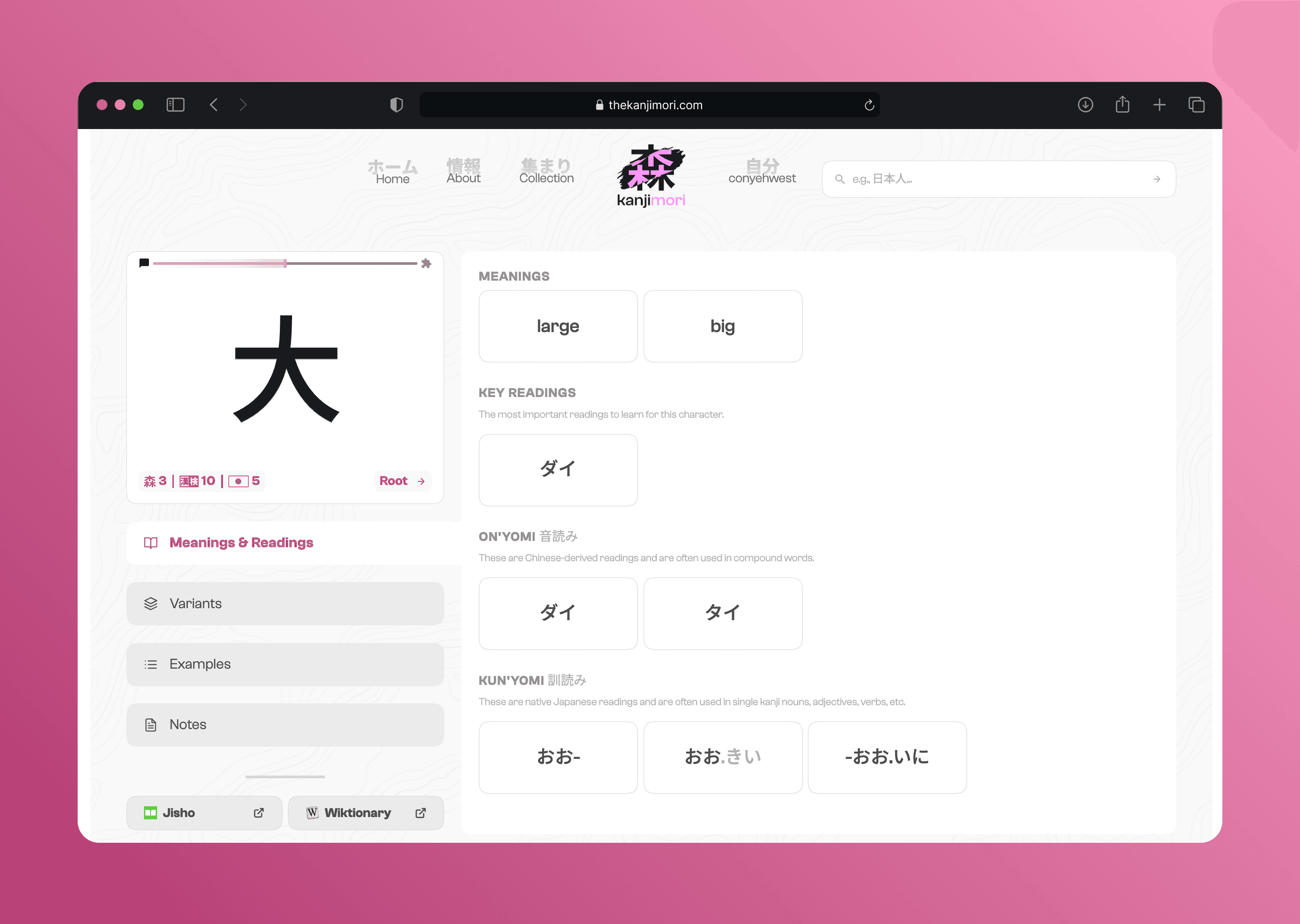
Overview
Kanjimori is a kanji learning app built around spaced repetition. I designed the kanji database page, which serves as the primary reference for users who want to go deeper on any character they encounter.
Problem
Kanji have multiple layers of information that mean different things depending on where you are in your learning journey. Most existing references present everything at once with no hierarchy, which is fine for a dictionary but overwhelming for a learner. Kanji are also deeply interconnected, so the page needed to clearly distinguish information about the current character from clickable references to related ones.
Solution
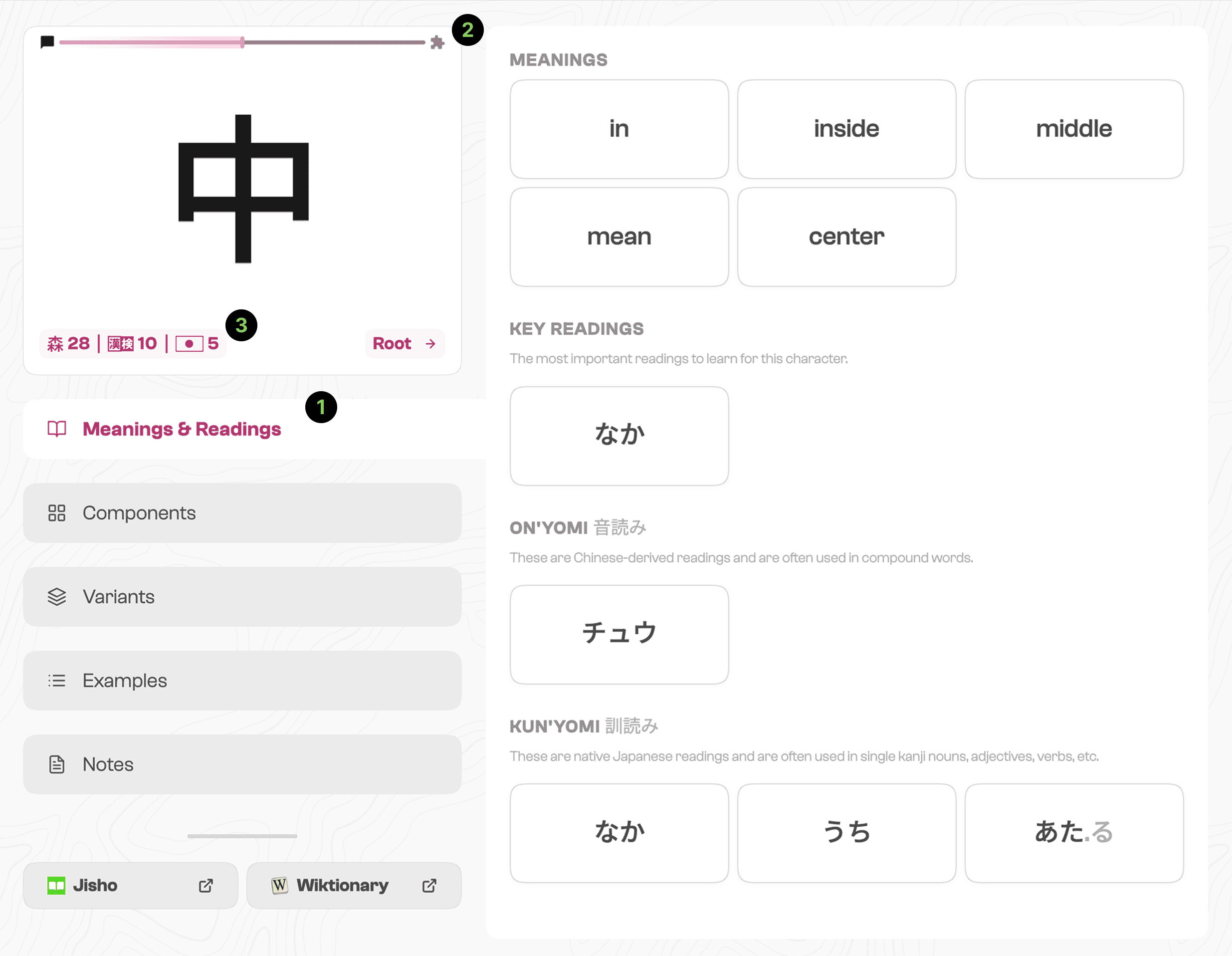
[1] Learner-first navigation
A prioritized tab structure surfaces meanings and readings first, with deeper linguistic information available but not competing for attention.
[2] Phono-semantic scale
The phono-semantic scale gives learners context that no standard dictionary provides, showing how likely a component is to influence the sound or meaning of compound kanji that contain it.
[3] Cross-system difficulty rating
The kanji card shows difficulty ratings across the JLPT system, Kanken level, and Kanjimori's own leveling system, giving learners immediate context on where a character sits in their overall journey.